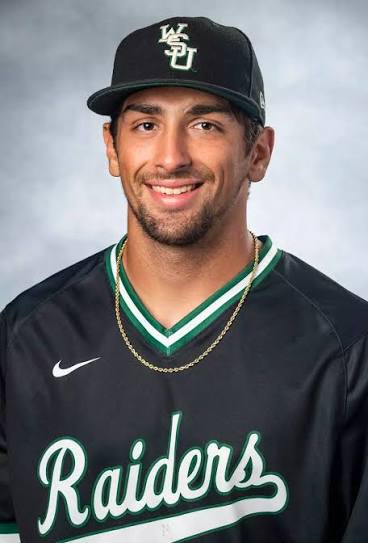
 Brock Nartker · Wright State
About
Who I am, and why I coach.
I've been obsessed with how pitchers actually develop since I was sixteen. Reading every method I could find, testing it on myself, trying to understand how the body really creates force. I don't love watching baseball on TV. I love training people. That's the honest version, and it's the whole reason I do this.
What most pitchers are actually missing
It isn't a drill. It's someone in their corner. Not so you do less work, so you can spend your attention on executing the plan instead of building it from scratch every week and hoping you got it right. A pitcher carrying his own programming is doing two jobs at once, and the throwing is the one that suffers. Hand that load to someone else and you free up the part of you that actually has to compete.
Most of what gets sold in here is oversold
There's the fixed set of mechanics you're supposed to fit. There's a squat number or a jump height treated like it's the point instead of a clue. And there's certainty, which is the biggest tell of all. Anyone who tells you they have pitching development figured out is selling you something. Real exercise physiology is only 80 to 90 years old as a science. The honest answer is that we explore. We try things, watch how your body responds, and keep what works for you.
What I actually train for
Skill. Most coaches treat training and pitching like two separate worlds, lifting over here and throwing over there. The bigger unlock is blending them, training in different environments with different stimuli so the skill holds up when it actually matters. I'm trying to give you every tool in the toolbox, not leave you stuck with a hammer when the situation calls for a drill.
I also care about how the work gets spent. You only have so much to put toward training in a given week. Throwing, lifting, recovery, the rest of your life. It's finite. The whole game is allocating it well instead of just piling on more and calling it harder. That's the training economy, and most overtraining is really just bad budgeting.
At the end of all of it, none of the rest is the point. Getting outs is the point. The skill is the point. Not the mechanics, not the metrics. The outcome, and the skill that produced it.
The playing career, and the work
I pitched at Wright State, Division 1, and touched 96. I got there by developing myself metrically, without much on-field success to lean on early. I learned the work by living it.
Since then I've helped develop 50 plus athletes, including Indy, MiLB, and MLB guys, as an assistant coach. Most of my hands-on work was on the throwing side, and I'm not going to overstate it. I didn't own every athlete's full strength program. What I bring is years on the ground watching high-level pitchers develop, plus a decade of studying how mechanics, throwing, and performance training actually fit together, instead of chasing whichever trend was loudest that year.
One thing worth saying plainly. Success as a player doesn't make someone a coach. The best athletes often can't tell you why they're good. They followed a plan that worked. Knowing how to do something and knowing how to teach it are different skills, and the gap between them is most of what coaching is.